15 Sitting Poses That Tell Stories (Not Just Fill Frames)

Why Sitting Poses Matter More Than You Think
Here’s something nobody tells you when you’re starting out in portrait photography: the moment someone sits down, they either relax completely or tense up like they’re waiting for a dentist appointment. There’s rarely an in-between.
I’ve spent years—way too many hours to count—watching people navigate that awkward dance between “where do I put my hands?” and “is this what you wanted?” And you know what I’ve learned? The best sitting poses aren’t really about the pose at all. They’re about creating a moment where your subject forgets they’re being photographed and simply exists in front of your lens.
That’s what this guide is really about. Not just 15 ways to arrange limbs and torsos (though we’ll absolutely cover that), but 15 invitations for your subjects to tell their story while sitting down.
Let’s dive in.
1. The Forward Lean (Or: The Universal Language of "I'm Listening")

You know that friend who leans in when you’re telling them something important? That’s this pose. It’s intimate without being invasive, engaged without being intense.
How to make it happen: Have your subject perch on the edge of something—a bench, a chair, a brick wall, whatever you’ve got. Ask them to lean forward, elbows resting on their knees. The hands? Keep them loose. Clasped, separated, supporting their chin—all work, just nothing that looks like they’re strangling their own fingers.
What it says: This pose whispers approachability. It’s perfect for anyone who needs to look thoughtful but not distant, confident but not closed off. Politicians love this one, but so do musicians, writers, and anyone who wants to seem like they’re genuinely interested in connecting.
The secret sauce: Tell your subject to imagine they’re leaning in to hear a secret. Their body language shifts immediately from “how should I sit?” to “I’m present.” Watch their face—that’s where the magic happens.
read more articles:Best AI Product Photo Editor for your online brand
2. Stairway Sessions (Because Stairs Are Geometry's Gift to Photographers)

Stairs do something magical: they force you to think in layers. They create leading lines without you even trying, and they make almost everyone look naturally at ease. Maybe it’s because we’ve all sat on stairs at some point in our lives—waiting for someone, taking a break, watching the world go by.
How to make it happen: Let your subject find their own spot first. Seriously, try it. People have an instinct for where they’re comfortable on stairs. Then refine from there. Legs can follow the steps, bend naturally, or stretch out. Backs can be straight or relaxed against the railing. Hands rest on steps or knees.
What it says: There’s something inherently casual about stairs. They suggest pause, transition, a moment between destinations. Use them for lifestyle shoots, editorial work, or anytime you want that “I caught you mid-thought” energy.
Watch out for: Stairs can be unforgiving on posture. Make sure your subject isn’t cramping their back trying to fit into the frame.
Shoot once. Finish everywhere with the AI Product Photo Editor.
Remove backgrounds, generate on-brand scenes, retouch with AI, and upscale for PDP zoom—turn on-white shots into marketplace-ready images in minutes.
Start with professional on-white photography, then scale assets without reshoots.3. The Lean-Back (Power Without Trying)
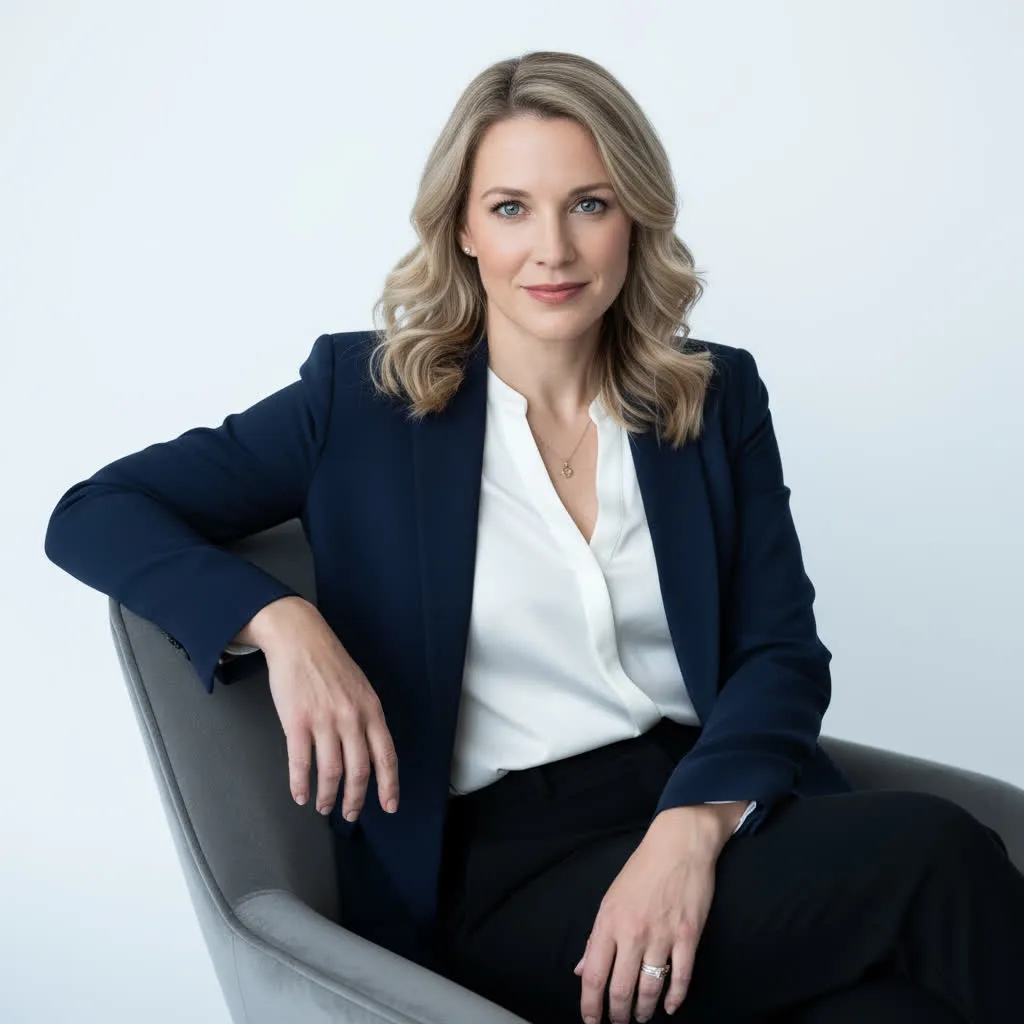
If the forward lean says “I’m listening,” the lean-back says “I’m comfortable exactly where I am.” It’s confidence in physical form. Think of how people sit when they’re in their own home, talking to old friends.
How to make it happen: Seat them somewhere with support—a chair with arms, a couch, a wide ledge. Have them lean back, arms resting on either side for balance. The key is keeping the shoulders relaxed. Tense shoulders ruin this pose faster than anything else.
What it says: Authority with accessibility. It’s the CEO pose, the artist-in-their-studio pose, the “I’ve-got-nothing-to-prove” pose.
The insider tip: This pose opens up the chest and torso beautifully, but it can also emphasize less-flattering angles if someone’s self-conscious. Be mindful, be kind, and if needed, have them lean forward just slightly to soften things.
read more articles:Best AI Clothing Photography
4. One Knee Up (The Restless Thinker)

There’s something inherently dynamic about this pose, like your subject might stand up at any moment and do something interesting. It suggests energy barely contained, thoughts in motion.
How to make it happen: Have them sit and pull one knee up, foot flat on the ground. The arm can rest on that knee, or they can wrap it around casually. The other leg? Bent, extended, crossed—honestly, whatever feels natural.
What it says: This is your go-to for anyone who’s more comfortable moving than sitting still. Athletes, activists, entrepreneurs, restless creatives. It works sitting on anything from concrete floors to expensive furniture.
Make it yours: Play with where they’re looking. Down at their knee? Thoughtful. At the camera? Engaged. Off into the distance? Dreaming.
Shoot once. Finish everywhere with the AI Product Photo Editor.
Remove backgrounds, generate on-brand scenes, retouch with AI, and upscale for PDP zoom—turn on-white shots into marketplace-ready images in minutes.
Start with professional on-white photography, then scale assets without reshoots.5. Legs Spread (Bold and Unapologetic)

Let’s be clear: this pose takes up space, and that’s exactly the point. It’s not for everyone, and it’s not for every shoot. But when you want your subject to own their presence in the frame? This is it.
How to make it happen: They sit—chair, bench, floor, rock—and spread their legs at a comfortable but assertive angle. Back straight or slightly forward. Hands on knees or thighs.
What it says: Power. Confidence. A refusal to shrink. It’s editorial gold, especially for fashion work or portraits where you’re celebrating strength and presence.
Use with intention: This pose makes a statement. Make sure it’s the statement you and your subject want to make.
read more articles: The Best Product Photography Angles to Capture Stunning Product Shots
6. Legs to the Side (Timeless Grace)

If there’s a pose that’s been working for portrait photographers since portraits were painted instead of photographed, this is it. There’s a reason it’s stood the test of time—it just works.
How to make it happen: Sitting on the floor or ground, have them tuck both legs to one side. The torso can turn slightly toward the camera or align with the legs. It creates this beautiful, flowing line through the body.
What it says: Elegance without effort. It’s soft, approachable, and universally flattering.
The trick nobody mentions: Make sure they’re not twisting too much at the lower back. It should feel natural, not like they’re contorting themselves into shape. If it looks uncomfortable, it will photograph uncomfortable.
read more articles: The Complete Guide to TikTok Image Size and Ad Specifications for 2024
7. The 45-Degree Angle (Flattery in Mathematics)

Angles matter. And the 45-degree angle? It’s like the golden ratio of portrait posing. It adds dimension, creates visual interest, and somehow makes everyone look more photogenic.
How to make it happen: Simple geometry. Have your subject angle their legs about 45 degrees from the camera. One leg bent, the other extended or crossed at the ankle. Torso can face the camera or follow the legs.
What it says: Casual sophistication. It’s relaxed enough to feel natural but composed enough to feel intentional.
Why it works: That angle elongates the body naturally, creating clean lines without looking forced. Fashion photographers know this one intimately.
read more articles: UGC Creator Guide: How to Make Money as a UGC Content Creator in 2025
8. Floor Sitting with One Knee Up (Grounded and Real)

There’s something honest about sitting on the floor. It strips away pretension. And when you add that one raised knee? You get structure and spontaneity in the same frame.
How to make it happen: They sit on the ground, one leg flat, one knee raised. An arm can rest on that raised knee for support. The other hand finds its place naturally—on the floor, on their thigh, wherever it falls comfortably.
What it says: Authenticity. It’s candid even when it’s carefully composed. Perfect for storytelling work, personal projects, or anytime you want to show someone as they actually are.
The beauty of it: This pose creates a triangle with the bent leg, and triangles are visual gold. They’re stable, interesting, and naturally draw the eye.
9. Table Lean (Bringing the World Closer)

Tables aren’t just furniture—they’re tools for creating intimacy. When someone leans on a table toward you, the psychological distance shrinks. Use this.
How to make it happen: They stand or sit at a table and lean forward, forearms or elbows on the surface. The body angles naturally forward. You can add props—a coffee cup, a notebook, glasses—or keep it clean and simple.
What it says: Approachability meets professionalism. It’s the “let’s talk over coffee” pose, the “I’m accessible despite my expertise” pose.
Get creative: Tables are everywhere, but so are table-like surfaces. Counters, railings, equipment, fences—anything at about waist to chest height becomes your collaborator.
10. The Chair Flip (Rebellion in Posture)

Turning a chair around and straddling it backwards is the visual equivalent of saying “I don’t play by your rules.” It’s got attitude built in.
How to make it happen: Chair backwards, legs on either side, arms resting on or folded over the chair back. They can lean forward or sit upright depending on the mood you’re chasing.
What it says: Confidence with edge. It’s perfect for musicians, artists, anyone who’s built a career on doing things differently.
When to use it: This pose demands intention. It’s not casual—it makes a statement. Make sure that statement fits your subject and your story.
11. Wall Lean with Bent Legs (Effortlessly Cool Since Forever)

If posing had a “greatest hits” album, this would be track one. It’s been working for decades because it taps into something universal: leaning against walls is what people do when they’re comfortable being themselves.
How to make it happen: Find a wall (brick, concrete, painted, wooden—doesn’t matter). They lean back against it, one or both legs bent. Hands can go in pockets, cross over the chest, or hang naturally.
What it says: Cool without trying. Urban. Real. It’s the pose that says “this is just how I exist in the world.”
Location is everything: The wall becomes part of the story. Graffitied alley? Weathered barn? Glass skyscraper? Each tells a different story with the exact same pose.
12. The L-Shape (When Geometry Becomes Grace)

Lines matter in photography, and the L-shape creates clean, intentional lines that guide the viewer’s eye exactly where you want it to go.
How to make it happen: Sitting on the floor or a flat surface, one leg extends straight, the other bends at 90 degrees. Torso stays upright. Hands rest gently on legs or beside them.
What it says: Structure with softness. It’s particularly beautiful in minimalist or fashion work where clean lines matter.
The visual trick: That L-shape naturally draws the eye along the extended leg and up to the subject’s face. Use it intentionally.
13. Leaning to One Side (Asymmetry is Interesting)

Symmetry is boring. There, I said it. When someone leans to one side, they break that symmetry and suddenly the frame has movement, flow, life.
How to make it happen: Seated on the ground or a low surface, they lean their weight to one side, propping themselves up with one hand or forearm. The other side stays free and relaxed.
What it says: Casual elegance. It’s comfortable without being sloppy, posed without looking forced.
Why it works: The human eye loves curves and diagonals. This pose creates both.
14. The Chin Cradle (Softness and Thought)

Hands on face, done right, create instant intimacy. Done wrong, they look like your subject is trying to hold their head on. The difference is in the lightness of touch.
How to make it happen: Seated comfortably, they bring one or both hands up to gently—gently—support their chin. Fingers should barely touch, not squish. The face tilts naturally into the hands.
What it says: Thoughtfulness. Vulnerability. Introspection. It’s perfect for portraits that need emotional depth.
The cardinal rule: Light touch. Always. If you see their skin compressing, dial it back.
15. Full Leg Cross (Classic Composed)

Some poses become classics for a reason. This is one. One leg fully crossed over the other, neat and tidy. It’s been working in portrait photography for generations.
How to make it happen: Seated on a chair or bench, they cross one leg completely over the other, letting it rest on the lower thigh. Posture can be straight and formal or slightly relaxed. Hands rest on the lap, chair arms, or knees.
What it says: Poise. Professionalism. Composed confidence. It’s your go-to for business portraits, formal occasions, or anytime polish matters.
Works best when: Your subject is comfortable enough to hold the position naturally. Forced formality always shows.
The Stuff Nobody Tells You (But Should)
After walking you through these 15 poses, here’s what matters more than any of them: the pose is never the point.
The point is the person. The story. The moment. The connection.
I’ve seen photographers tie themselves in knots trying to replicate a pose they saw online, forcing their subject into an uncomfortable pretzel because “this is how it’s supposed to look.” And you know what? The images feel forced because the experience was forced.
Here’s what I do instead: I practice these poses on myself. I sit in my living room with a timer and figure out what feels natural versus what looks good in theory but terrible in practice. Then when I’m with a subject, I have a mental library to draw from—but I stay flexible enough to let them show me what works for them.
Some people are naturally comfortable sitting. Others feel exposed and awkward the moment they’re lower than standing height. Your job isn’t to force the pose—it’s to find the version that helps them feel like themselves, only more so.
Start with connection, not pose. Talk to them. Find out how they naturally sit when they’re comfortable. Watch how they position themselves when they think you’re not paying attention. That’s where the real magic lives—in those unguarded moments when they forget to be nervous.
Use these 15 poses as invitations, not instructions. Say “Hey, try leaning forward like you’re telling me a secret” rather than “Pose 1: Forward lean, elbows on knees.” The former gets you genuine engagement. The latter gets you stiff awkwardness.
And finally, remember this: The best photograph isn’t the one with perfect pose execution. It’s the one where someone looking at your image feels something—recognition, connection, emotion, curiosity. That’s what we’re really after.
So grab your camera. Find someone willing to sit still for you. Try these poses, break these poses, invent new poses. Make mistakes. Make discoveries. Make images that matter.
The sitting part? That’s just where the story begins.
Frequently Asked Questions (FAQs)
The best sitting poses depend on your subject and story, but universally flattering options include the forward lean with elbows on knees (creates engagement and approachability), the 45-degree angle pose (adds dimension and elongates the body), and the classic leg cross (conveys poise and confidence). For more casual shoots, try one knee up or legs dangling from an elevated surface. The key is matching the pose to your subject’s personality and comfort level—a forced pose always shows in the final image, no matter how technically “correct” it is.
Natural sitting poses come from observing how people actually sit when they’re comfortable. Start by having a conversation with your subject while they’re seated—watch how they naturally position themselves. Most people will lean slightly forward or to one side, rest an arm somewhere, and find their own comfortable position. Then gently refine what they’re already doing rather than forcing them into a completely different posture. Key tips: keep shoulders relaxed, avoid symmetrical positioning (it looks stiff), ensure they’re not cramping their lower back, and remind them to breathe normally.
Avoid these common mistakes: forcing hands too tightly against the face (creates unflattering squishing), having subjects sit perfectly symmetrical (looks stiff and unnatural), positioning legs in ways that cramp the lower back, creating tension in the shoulders, and using poses that feel uncomfortable or unnatural to your subject. Also avoid having subjects sit too far back in chairs (can make them look swallowed by furniture) or lean so far forward they look like they’re about to fall over. When in doubt, if it feels awkward to hold, it will look awkward in photos.
While pose “rules” based on gender are outdated, there are practical considerations: traditionally masculine poses tend to take up more space (legs spread, arms wide, open posture) and convey power and confidence, while traditionally feminine poses often emphasize curves and elegance (legs to the side, crossed ankles, soft angles). However, the best approach is to match poses to individual personality and the story you’re telling, regardless of gender. Modern portrait photography increasingly focuses on authentic expression over gendered pose conventions—confidence looks good on everyone, and so does vulnerability when it’s genuine.
For sitting portraits, use aperture priority mode with a wide aperture (f/1.8 to f/2.8) to create beautiful background blur and subject isolation. Keep your ISO as low as possible for your lighting conditions (100-400 in good light, higher if needed). Shutter speed should be at least 1/125s to avoid motion blur, though 1/200s is safer. Use single-point autofocus on the subject’s nearest eye for tack-sharp focus. For full-body sitting poses, you can stop down to f/4 or f/5.6 to keep more in focus. Shoot in RAW format for maximum editing flexibility, and consider using a focal length between 50mm and 85mm for flattering perspective.
Shoot once. Finish everywhere with the AI Product Photo Editor.
Remove backgrounds, generate on-brand scenes, retouch with AI, and upscale for PDP zoom—turn on-white shots into marketplace-ready images in minutes.
Start with professional on-white photography, then scale assets without reshoots.if you’re looking to increase your online conversion but still feel you are not sure where to start – check out these resources below: